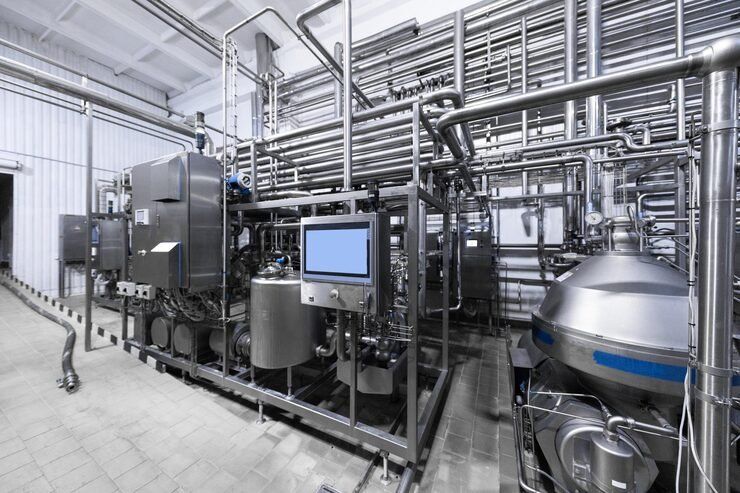
Industrial brewing equipment consists of specialized machinery and integrated systems used to transform brewing ingredients into finished beer through controlled mashing, lautering, boiling, fermentation, maturation, filtration, filling, and packaging processes. Modern breweries use combinations of stainless-steel vessels, pumps, heat exchangers, fermentation tanks, control systems, and packaging equipment.
Equipment configuration varies according to brewery capacity, beer styles, production methods, automation requirements, and packaging formats.
What Is Industrial Brewing Equipment?
Industrial brewing equipment refers to the machines and processing systems used in commercial-scale beer production. A complete brewery can include equipment for raw-material handling, wort production, fermentation, conditioning, filtration, storage, filling, and packaging.
Typical equipment includes:
Malt handling systems
Milling machines
Mash tuns
Lauter tuns
Wort kettles
Whirlpool vessels
Heat exchangers
Fermentation tanks
Conditioning tanks
Filtration systems
Bright beer tanks
Filling and packaging machines
These components can operate as individual units or as integrated automated production systems.
Major Brewing Technologies
Malt Milling
Malt mills crack or grind malted grain to expose the internal starch while maintaining an appropriate husk structure for downstream lautering.
Mashing
During mashing, milled malt is mixed with water under controlled temperature conditions. Enzymatic activity converts starches into fermentable sugars and other compounds.
Lautering
Lautering separates the liquid wort from spent grain. Lauter tuns and related filtration systems control wort collection while retaining the grain bed.
Wort Boiling
Wort is heated in a brewing kettle. This stage supports concentration, sterilization, and controlled utilization of hops and other brewing ingredients.
Whirlpool Separation
Whirlpool vessels use controlled fluid movement to separate trub and other solids from the hot wort before cooling.
Fermentation
Fermentation tanks provide controlled environments where yeast converts fermentable sugars into alcohol, carbon dioxide, and other compounds that influence beer characteristics.
Conditioning and Maturation
Conditioning tanks provide controlled storage after primary fermentation. Temperature and pressure can be managed according to the beer and production process.
Filtration
Some beer production systems use filtration to remove suspended particles and produce the desired clarity. Other production methods may use alternative clarification approaches.
Major Types of Industrial Brewing Machines
| Machine Type | Primary Function | Typical Processing Stage |
|---|---|---|
| Malt Mill | Grinds malted grain | Raw-material preparation |
| Mash Tun | Supports mashing | Mashing |
| Lauter Tun | Separates wort from grain | Lautering |
| Brew Kettle | Boils wort | Wort production |
| Whirlpool | Separates solids | Wort clarification |
| Heat Exchanger | Rapidly cools wort | Wort cooling |
| Fermentation Tank | Supports fermentation | Fermentation |
| Conditioning Tank | Conditions beer | Maturation |
| Bright Beer Tank | Stores finished beer | Final processing |
| Filling Machine | Fills containers | Packaging |
Industrial Brewing Production Process
The exact process varies by brewery and beer style, but commercial production generally includes the following stages.
1. Raw-Material Handling
Malted grains, hops, yeast, water, and other ingredients are received, stored, measured, and transferred into the production system.
2. Milling
Malted grains are milled to prepare them for mashing. Particle size and husk condition influence downstream extraction and filtration.
3. Mashing
Milled grain is combined with heated water. Controlled temperature rests allow enzymes to convert starches into fermentable sugars.
4. Lautering
The resulting mash is separated into liquid wort and spent grain. The wort continues to the boiling stage.
5. Boiling and Hop Addition
Wort is boiled and hops or other brewing ingredients may be introduced according to the recipe and process design.
6. Whirlpool and Cooling
After boiling, solids can be separated before the wort is rapidly cooled using a heat exchanger.
7. Fermentation
Cooled wort enters fermentation vessels where yeast converts sugars into alcohol and carbon dioxide.
8. Conditioning
Beer may be conditioned at controlled temperatures and pressures to develop the desired characteristics.
9. Filtration or Clarification
Depending on the production method, beer can undergo filtration or another clarification process before packaging.
10. Filling and Packaging
Finished beer is transferred into bottles, cans, kegs, or other approved containers using specialized filling and packaging equipment.
Automation in Brewing Equipment
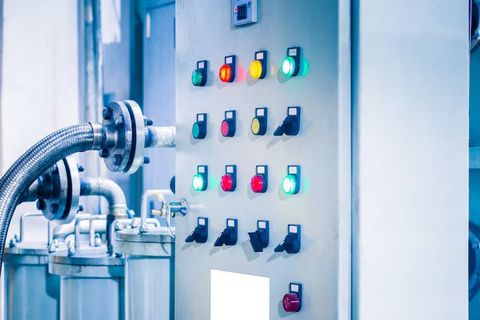
Modern industrial brewing equipment increasingly incorporates automation to monitor and coordinate production stages.
Common technologies include:
PLC-based control systems
Temperature sensors
Flow meters
Pressure sensors
Automated valves
Variable-frequency drives
Recipe-management software
Tank-level monitoring
Automated cleaning systems
Production data logging
Automated systems can coordinate water, wort, steam, ingredients, temperature, flow, and tank operations while providing operators with centralized process information.
Cleaning and Sanitation Systems
Hygienic processing is a critical aspect of brewery equipment. Many industrial breweries use clean-in-place (CIP) systems to circulate cleaning solutions through tanks, pipes, heat exchangers, and other process equipment without extensive disassembly.
A CIP system can include:
Cleaning tanks
Pumps
Valves
Spray devices
Temperature controls
Chemical dosing systems
Return lines
The exact cleaning procedure depends on equipment design, production conditions, cleaning chemicals, and applicable food-safety requirements.
Global Manufacturers and Suppliers
The industrial brewing equipment market includes manufacturers specializing in brewhouses, fermentation systems, tanks, filtration, filling, packaging, automation, and complete brewery installations.
When evaluating manufacturers and suppliers, consider:
Brewery capacity
Brewing configuration
Tank volumes
Material specifications
Automation capabilities
Heat and energy requirements
CIP integration
Packaging compatibility
Maintenance requirements
Spare-parts availability
Equipment should be selected according to the brewery's production workflow, facility layout, product range, and operating requirements.
Industrial Applications
Large Breweries
Large-scale breweries typically use integrated brewhouses, fermentation systems, storage tanks, filtration equipment, automated packaging, and centralized control systems.
Craft Breweries
Smaller breweries may use modular brewing systems that provide flexibility for different recipes and production volumes.
Contract Brewing Facilities
Contract-production facilities can require flexible brewing, fermentation, storage, and packaging systems capable of handling different product specifications.
Specialty Beer Production
Specialty products may require customized vessels, temperature controls, ingredient-handling systems, or fermentation configurations.
Brewery Packaging
Packaging systems can handle bottles, cans, kegs, and other approved containers, with equipment selected according to production speed and package format.
How to Select Industrial Brewing Equipment
Selecting equipment requires evaluating the entire brewing workflow.
Production capacity: Determine expected wort and finished-beer output per batch, day, or year.
Brewhouse configuration: Consider the number and size of vessels required for the planned production schedule.
Fermentation capacity: Tank volume and the number of vessels influence production scheduling and storage requirements.
Automation: Determine the appropriate level of manual, semi-automatic, or automated process control.
Temperature control: Mashing, wort cooling, fermentation, and conditioning require controlled thermal conditions.
CIP capability: Evaluate cleaning-system design and compatibility with tanks and process piping.
Energy requirements: Heating, refrigeration, pumping, compressed air, and other utilities should be considered.
Packaging: Bottle, can, keg, or other formats require different filling and packaging configurations.
Frequently Asked Questions
What equipment is used in industrial brewing?
Common equipment includes malt mills, mash tuns, lauter tuns, brew kettles, whirlpool vessels, heat exchangers, fermentation tanks, conditioning tanks, bright beer tanks, filtration systems, and packaging machines.
How does industrial brewing equipment work?
The equipment supports sequential stages including grain milling, mashing, lautering, wort boiling, clarification, cooling, fermentation, conditioning, clarification, and packaging.
What is a brewhouse?
A brewhouse is the group of vessels and systems used to produce wort from malted grain, water, and brewing ingredients. It commonly includes mashing, lautering, boiling, and whirlpool functions.
Why are fermentation tanks important?
Fermentation tanks provide controlled environments for yeast activity and beer fermentation. Temperature, pressure, tank geometry, and monitoring systems can influence the production process.
What factors affect industrial brewing equipment selection?
Production capacity, brewhouse configuration, fermentation capacity, automation, temperature control, cleaning systems, energy requirements, facility layout, packaging format, and maintenance requirements all influence equipment selection.
Conclusion
Industrial brewing equipment integrates mechanical, thermal, fluid-handling, fermentation, filtration, automation, and packaging technologies to support commercial beer production. From malt milling and wort preparation to fermentation, conditioning, filling, and packaging, each processing stage requires equipment designed for controlled operation.
Understanding brewing technologies, machine types, production processes, automation, cleaning systems, and supplier considerations provides a foundation for developing a brewery system aligned with specific production requirements.