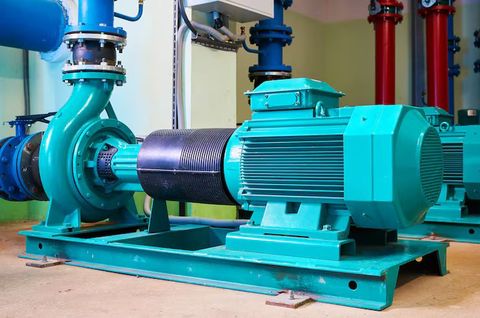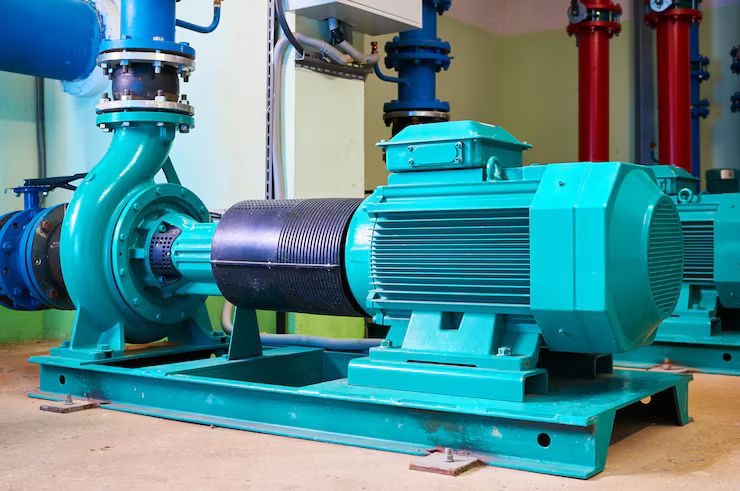
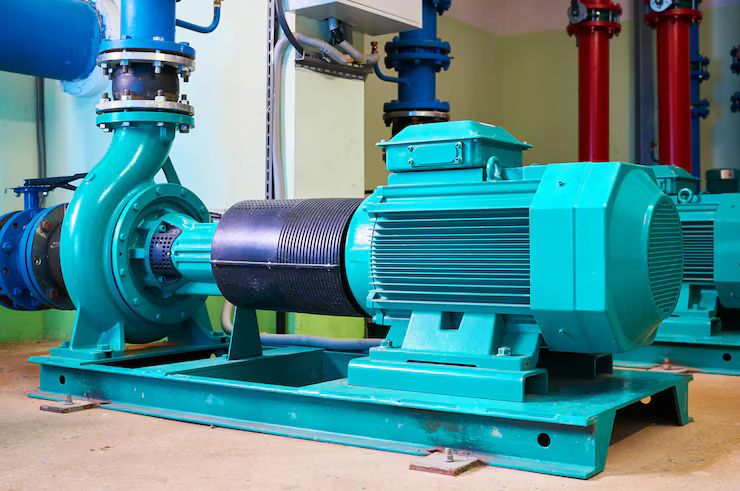
Industrial motors are electromechanical machines that convert electrical energy into mechanical motion for industrial equipment and production systems. They drive pumps, compressors, fans, conveyors, mixers, machine tools, crushers, blowers, and many other systems used across manufacturing and process industries.
Motor selection depends on factors such as power, speed, torque, voltage, duty cycle, efficiency, environmental conditions, control requirements, and mechanical configuration. Understanding the major motor technologies and their applications helps engineers and plant operators select an appropriate drive system.
Why Industrial Motors Matter
Motors are fundamental components of industrial automation and mechanical equipment. A motor can operate continuously, intermittently, or under varying loads depending on its design and duty classification.
Industrial motors are used in applications where controlled rotational or linear mechanical power is required.
Common applications include:
- Pumps
- Compressors
- Fans and blowers
- Conveyor systems
- Machine tools
- Industrial mixers
- Crushers
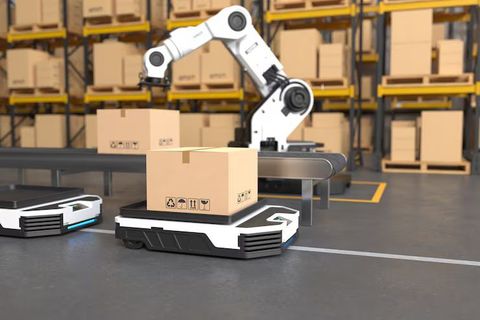
- Material-handling systems
- HVAC equipment
- Packaging machinery
- Process equipment
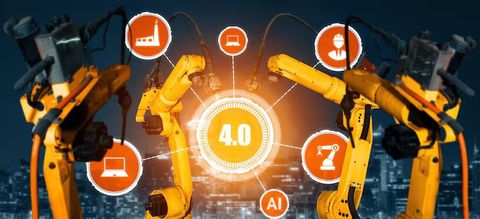
- Automated production systems
The operating environment can also influence motor selection. Dust, moisture, chemicals, temperature, vibration, and hazardous atmospheres may require specific motor enclosure and protection characteristics.
Industrial Motor Technologies
Several motor technologies are used in industrial applications. Each has different electrical, mechanical, and control characteristics.
Induction Motors
Induction motors are widely used in industrial equipment because of their relatively simple construction and suitability for many continuous-duty applications.
Three-phase induction motors are commonly found in pumps, fans, compressors, conveyors, and general manufacturing equipment.
They can operate directly from an electrical supply or through a variable frequency drive when variable speed control is required.
Synchronous Motors
Synchronous motors operate at a speed synchronized with the rotating magnetic field.
They can be used where constant speed, power-factor characteristics, or high-power operation are important. Large industrial installations may use synchronous motors for compressors, pumps, and other high-power equipment.
DC Motors
DC motors provide useful speed and torque characteristics for certain applications requiring controlled acceleration or variable-speed operation.
Although many newer systems use AC motors with electronic drives, DC motors remain relevant in selected industrial applications and existing installations.
Servo Motors
Servo motors are designed for applications requiring precise control of position, speed, or torque.
They are commonly integrated with servo drives and feedback systems in:
- Robotics
- CNC machines
- Packaging equipment
- Automated assembly
- Motion-control systems
- Precision manufacturing
Stepper Motors
Stepper motors move in discrete increments and are commonly used in applications requiring controlled positioning.
They can be found in selected automation, instrumentation, indexing, and motion-control applications.
Major Types of Industrial Motors
| Motor Type | Main Characteristic | Typical Applications |
|---|---|---|
| Induction Motor | Simple and versatile AC operation | Pumps, fans, conveyors |
| Synchronous Motor | Synchronized operating speed | Compressors, large machinery |
| DC Motor | Speed and torque control | Selected industrial drives |
| Servo Motor | Precise motion control | Robotics, CNC, packaging |
| Stepper Motor | Incremental positioning | Automation, indexing |
| Brushless DC Motor | Electronic commutation | Automation, specialized equipment |
| Gear Motor | Integrated speed reduction | Conveyors, material handling |
| Explosion-Proof Motor | Designed for specified hazardous environments | Chemical and process plants |
Industrial Motor Manufacturing Process
The manufacturing process varies according to motor type, size, materials, and performance requirements. A generalized production sequence includes:
Design → Material Selection → Lamination Manufacturing → Stator Assembly → Rotor Manufacturing → Winding → Insulation → Bearing Installation → Housing Assembly → Electrical Testing → Performance Testing → Final Inspection
Electrical Steel Laminations
Motor cores generally use laminated electrical steel to reduce certain forms of energy loss associated with alternating magnetic fields.
Individual laminations are stamped or otherwise produced and assembled into stator and rotor cores.
Stator Winding
Copper or other suitable conductors are formed into windings and installed in the stator slots.
Insulation systems protect the conductors and provide electrical separation between windings and the motor core.
Rotor Manufacturing
Rotor construction depends on the motor technology.
Induction motors may use squirrel-cage rotors, while other motor designs can use permanent magnets, wound rotors, or other configurations.
Assembly
The rotor, stator, bearings, shaft, housing, cooling components, terminal arrangements, and other parts are assembled into the completed motor.
Testing
Manufacturers may conduct electrical and mechanical tests covering parameters such as insulation resistance, winding characteristics, vibration, temperature rise, speed, torque, and efficiency according to the applicable motor specification and standards.
Motor Efficiency and Energy Performance
Motor efficiency is an important consideration because industrial motors can operate for long periods.
Efficiency represents how effectively electrical input is converted into mechanical output. Motor losses can occur through electrical resistance, magnetic effects, mechanical friction, ventilation, and other mechanisms.
Efficiency considerations become particularly relevant when motors operate continuously or under high loads.
Variable frequency drives can also allow motor speed to be adjusted according to process requirements. In applications such as fans and pumps, reducing speed can significantly alter power requirements.
Motor Enclosures and Cooling Systems
Industrial motors operate in different environments, so enclosure and cooling design are important.
Common enclosure concepts include:
- Open designs for suitable controlled environments
- Totally enclosed configurations
- Fan-cooled designs
- Air-over configurations
- Water-cooled arrangements
- Specialized hazardous-area designs
The appropriate enclosure depends on dust, water exposure, chemicals, ambient temperature, ventilation, and hazardous-area requirements.
Automation and Motor Control
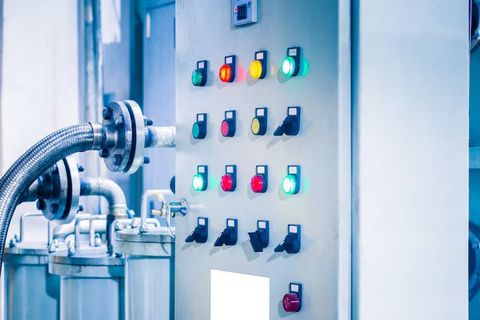
Modern industrial motor systems often combine motors with electronic control equipment.
A typical system can include:
Motor → Motor Starter or Drive → Controller → Sensors → Industrial Control System
Variable frequency drives can control motor speed and provide functions such as acceleration and deceleration control.
Servo systems add feedback devices such as encoders to provide precise motion control.
Industrial automation platforms can also monitor motor current, temperature, vibration, operating hours, and fault conditions.
Global Industrial Motor Manufacturers and Suppliers
The global industrial motor market includes manufacturers supplying low-voltage, medium-voltage, high-efficiency, specialty, and motion-control motors.
ABB provides industrial motors and drive technologies for applications across manufacturing, process industries, infrastructure, and energy.
Siemens supplies electric motors, drives, and automation technologies for industrial applications.
WEG manufactures electric motors and related drive technologies for industrial and commercial applications.
Nidec develops electric motor technologies for industrial and other applications.
Regal Rexnord supplies electric motors, controls, and power-transmission technologies used in industrial systems.
The appropriate manufacturer or supplier depends on motor specifications, regional requirements, application conditions, availability, technical support, and compatibility with the driven equipment.
Industrial Motor Applications
Industrial motors are used across a broad range of sectors.
Manufacturing
Motors drive conveyors, machine tools, mixers, production machinery, packaging equipment, and automated systems.
Oil and Gas
Motors can operate pumps, compressors, fans, and other process equipment. Hazardous-area requirements may be relevant in certain locations.
Water and Wastewater
Pump systems commonly use electric motors for water movement, treatment processes, and wastewater handling.
Mining
Motors can drive conveyors, crushers, pumps, fans, hoists, and material-handling systems.
Chemical Processing
Industrial motors operate pumps, agitators, compressors, mixers, and other process equipment.
Food and Beverage
Motors are used in conveyors, mixers, pumps, filling systems, refrigeration equipment, and packaging machinery.
HVAC and Building Systems
Motors operate fans, pumps, compressors, and air-handling equipment.
How to Select Industrial Motors
Selecting an industrial motor requires evaluating the complete application.
1. Determine Required Power
Identify the mechanical power required by the driven equipment. Oversizing or undersizing can affect system performance and operating efficiency.
2. Check Speed Requirements
Determine the required operating speed and whether fixed or variable speed is necessary.
3. Evaluate Torque
Starting torque, acceleration torque, and running torque should match the driven load.
4. Consider Electrical Supply
Check voltage, frequency, phase configuration, starting method, and available electrical infrastructure.
5. Review Duty Cycle
Determine whether the motor operates continuously, intermittently, or under changing load conditions.
6. Evaluate the Environment
Consider ambient temperature, moisture, dust, chemicals, vibration, altitude, and hazardous-area classification where applicable.
7. Consider Motor Control
Determine whether direct-on-line starting, soft starting, variable frequency control, or servo control is appropriate.
8. Check Mechanical Requirements
Shaft dimensions, mounting arrangement, coupling, bearings, and available installation space should be compatible with the driven equipment.
Industrial Motor Cost and Pricing Factors
The industrial motor cost varies according to power rating, motor technology, efficiency class, voltage, construction, enclosure, cooling method, control requirements, and environmental protection.
Pricing can also be influenced by:
- Motor size
- Voltage class
- Efficiency requirements
- Construction materials
- Hazardous-area certification
- Cooling configuration
- Bearings
- Mounting arrangement
- Variable-speed compatibility
- Custom engineering
- Testing requirements
A small standard induction motor has a very different specification from a high-power medium-voltage motor or precision servo system.
When comparing motor options, the complete operating requirements should be considered rather than the purchase specification alone.
Best Practices for Industrial Motor Maintenance
Regular inspection can help identify developing electrical and mechanical problems.
Important maintenance activities can include:
- Checking vibration
- Monitoring bearing condition
- Inspecting electrical connections
- Measuring insulation condition
- Monitoring operating temperature
- Checking alignment
- Inspecting cooling systems
- Reviewing motor current
- Checking lubrication where applicable
- Recording operating trends
Condition-monitoring technologies can also provide data for predictive maintenance programs.
Frequently Asked Questions
What are industrial motors?
Industrial motors are electromechanical devices that convert electrical energy into mechanical power for equipment such as pumps, compressors, conveyors, fans, mixers, and manufacturing machinery.
What is the most common type of industrial motor?
Three-phase induction motors are widely used across industrial applications because of their construction, versatility, and compatibility with many types of driven equipment.
What is the difference between an induction motor and a synchronous motor?
An induction motor operates through electromagnetic induction and normally runs with some slip relative to the rotating magnetic field, while a synchronous motor operates at synchronized speed under suitable operating conditions.
What factors should be considered when selecting an industrial motor?
Important factors include power, speed, torque, voltage, frequency, duty cycle, efficiency, environment, enclosure, mounting arrangement, control method, and driven-load characteristics.
How can industrial motor efficiency be improved?
Efficiency can be supported through appropriate motor sizing, suitable efficiency classes, proper maintenance, load management, and variable-speed control where the application benefits from speed adjustment.
Conclusion
Industrial motors provide the mechanical power behind a wide range of manufacturing and process systems. Induction, synchronous, DC, servo, stepper, brushless, and specialty motors each serve different operating requirements.
Selecting the appropriate motor requires an understanding of power, speed, torque, electrical supply, duty cycle, environment, efficiency, control strategy, and mechanical installation. When these factors are evaluated together, manufacturers and plant operators can develop motor systems suited to their specific industrial applications.