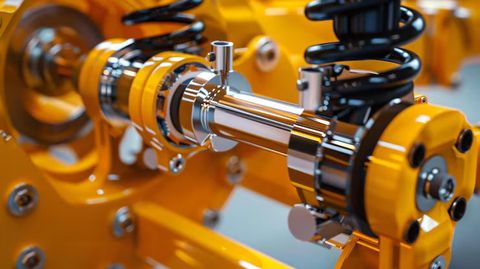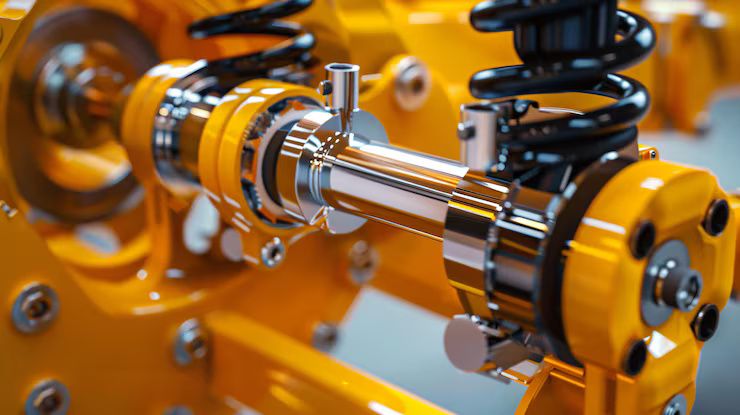
Hydraulic cylinders are mechanical actuators that convert pressurized hydraulic fluid into controlled linear motion.
They are widely used in construction equipment, manufacturing machinery, agricultural equipment, material handling systems, mobile hydraulics, and industrial automation. Hydraulic cylinder manufacturing combines precision machining, steel fabrication, sealing technology, surface treatment, and hydraulic engineering.
Context
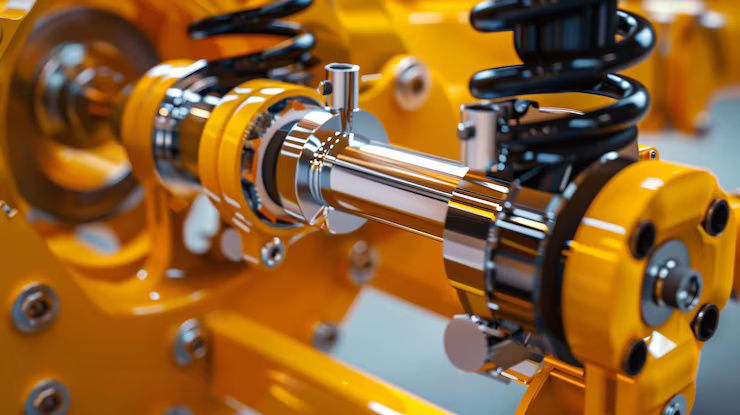
A hydraulic cylinder generally consists of a cylinder barrel, piston, piston rod, seals, gland, and mounting components. Hydraulic fluid enters one or more chambers, creating pressure against the piston and producing linear movement.
The cylinder design depends on factors such as required force, stroke length, operating pressure, mounting arrangement, movement speed, environmental conditions, and duty cycle.
| Component | Main Function |
|---|---|
| Cylinder barrel | Contains hydraulic fluid and guides the piston |
| Piston | Separates hydraulic chambers and transfers pressure |
| Piston rod | Transmits linear force to external equipment |
| Rod seal | Limits fluid leakage around the rod |
| Piston seal | Helps maintain pressure between chambers |
| Gland | Supports and seals the rod area |
| Mounting system | Connects the cylinder to machinery |
| Hydraulic ports | Allow fluid to enter and exit chambers |
Importance of Hydraulic Cylinder Technologies
Hydraulic cylinders are important because hydraulic systems can generate substantial linear forces within relatively compact mechanical arrangements. This makes them suitable for machinery requiring lifting, pushing, pulling, clamping, positioning, steering, or controlled movement.
Force and Motion Control
Cylinder force is influenced by hydraulic pressure and effective piston area. By regulating fluid flow and pressure, hydraulic systems can control actuator speed and force.
This allows cylinders to perform repetitive mechanical movements in equipment such as presses, lifting mechanisms, injection molding machines, excavators, and production machinery.
Integration With Hydraulic Systems
A cylinder does not operate independently. It normally works with hydraulic pumps, valves, reservoirs, filters, hoses or pipes, sensors, and electronic or mechanical control systems.
The interaction between these components determines how accurately and safely the cylinder performs its intended movement.
Hydraulic Cylinder Types
Hydraulic cylinders can be classified according to their operating configuration, construction, and application.
Single-Acting Cylinders
A single-acting cylinder uses hydraulic pressure to move the piston primarily in one direction. Return movement may occur through gravity, a spring, an external load, or another mechanical arrangement.
These cylinders can be used where powered movement is required mainly in one direction.
Double-Acting Cylinders
Double-acting cylinders use hydraulic pressure on both sides of the piston. Hydraulic fluid can therefore control extension and retraction.
They are widely used where controlled movement is required in both directions.
Telescopic Cylinders
Telescopic cylinders contain multiple nested stages. When extended, the stages progressively move outward, producing a relatively long stroke from a compact retracted length.
They are frequently associated with dump bodies, lifting equipment, and applications where installation space is limited.
Tie-Rod Cylinders
Tie-rod cylinders use external rods to hold the end caps against the cylinder body. This configuration is commonly used in industrial machinery because components can be relatively straightforward to inspect and replace.
Welded Cylinders
Welded cylinders use welded construction around the barrel and end components. They are commonly found in mobile equipment and applications where compact dimensions and structural strength are important.
Hydraulic Cylinder Manufacturing Processes
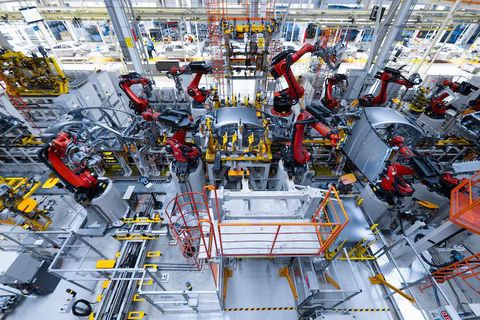
Hydraulic cylinder manufacturing involves several stages designed to achieve dimensional accuracy, structural integrity, and controlled fluid containment.
Material Selection
Cylinder barrels and rods are commonly produced from engineered steels selected according to pressure, mechanical loading, corrosion exposure, and surface requirements.
Material selection can also depend on operating temperature and environmental conditions.
Cylinder Barrel Manufacturing
The barrel is typically prepared through cutting, machining, boring, honing, and related processes. The internal surface must provide suitable geometry and surface characteristics for piston movement and sealing.
Precision finishing can help control leakage and reduce friction between moving components.
Piston Rod Manufacturing
Piston rods require careful machining because they transfer mechanical forces between the piston and external equipment.
Processes can include turning, grinding, polishing, threading, and surface treatment. Chrome plating or alternative surface technologies may be applied in applications where wear and corrosion resistance are important.
Piston Manufacturing
The piston is machined to match the internal dimensions of the cylinder barrel. Seal grooves and other features are produced according to the hydraulic design.
Dimensional accuracy is important because the piston must maintain an appropriate relationship with the barrel while allowing controlled movement.
Seal Installation
Seals prevent hydraulic fluid from escaping and help maintain pressure between chambers. Common sealing materials are selected according to fluid type, temperature, pressure, movement speed, and environmental exposure.
Incorrect seal selection can contribute to leakage, friction, or premature component degradation.
Assembly and Testing
After machining and preparation, the cylinder components are assembled. Testing may include pressure testing, leakage inspection, dimensional verification, stroke checks, and functional testing.
The specific test procedure depends on the cylinder design and applicable engineering requirements.
Hydraulic Technologies
Modern hydraulic cylinder systems combine traditional fluid-power principles with electronic monitoring and automation.
Electro-Hydraulic Control
Electronic controls can regulate hydraulic valves based on signals from sensors, controllers, or machine-control systems. This allows cylinder movement to be coordinated with other machine functions.
Position Sensing
Linear position sensors can determine piston-rod position. Technologies may include magnetostrictive sensors, linear potentiometers, or other position-measurement systems.
Position feedback can support automated positioning and closed-loop control.
Pressure Monitoring
Pressure sensors can monitor hydraulic pressure in one or more chambers. This information can help operators or control systems identify abnormal loading or changes in system behavior.
Condition Monitoring
Modern equipment can incorporate sensors for pressure, temperature, vibration, position, and hydraulic-fluid condition. Data can be used to support inspection and maintenance planning.
Manufacturers and Suppliers
Hydraulic cylinder manufacturers and suppliers may produce standardized cylinders, application-specific configurations, or custom-engineered assemblies. Selection generally depends on technical requirements rather than a single universal specification.
Important technical information to review includes:
- Bore diameter
- Rod diameter
- Stroke length
- Operating pressure
- Maximum pressure
- Mounting configuration
- Hydraulic-port arrangement
- Seal materials
- Operating temperature
- Corrosion requirements
- Applicable standards
Technical drawings and dimensional documentation are particularly important when replacing an existing cylinder because mounting dimensions and interfaces must match the machinery.
Industrial Applications
Hydraulic cylinders are used across many sectors where controlled linear movement is required.
Construction Equipment
Excavators, loaders, cranes, compactors, and other construction machinery use hydraulic cylinders for boom, arm, bucket, steering, lifting, and positioning functions.
Manufacturing Machinery
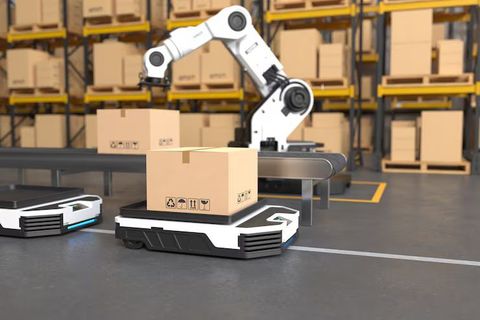
Industrial presses, forming equipment, injection molding machines, clamping systems, and material handling machinery can incorporate cylinders for controlled mechanical movement.
Agricultural Machinery
Tractors, harvesters, loaders, implements, and other agricultural equipment use hydraulic actuators for lifting, steering, adjustment, and positioning.
Material Handling
Forklifts, lifting platforms, dock equipment, and industrial handling systems can use hydraulic cylinders to raise, lower, tilt, or position loads.
Energy and Infrastructure
Hydraulic cylinders can be incorporated into gates, valves, lifting structures, testing equipment, and specialized machinery used in infrastructure and energy facilities.
Recent Updates in Hydraulic Cylinder Technology
Hydraulic cylinder development increasingly focuses on efficiency, sensing, durability, compact construction, and integration with electronically controlled hydraulic systems.
Smart Hydraulic Actuators
Sensors can provide information about cylinder position, pressure, and operating conditions. This data can be integrated with machine controllers for monitoring and automated control.
Compact Cylinder Designs
Manufacturers continue to develop cylinder configurations that provide required stroke and force within constrained installation spaces. Compact mounting arrangements can be important in mobile equipment.
Improved Surface Engineering
Surface treatments for piston rods and internal components can improve resistance to wear and environmental exposure. The appropriate technology depends on the application and material combination.
Energy-Efficient Hydraulic Systems
Variable-displacement pumps, electronically controlled valves, load-sensing circuits, and optimized actuator control can reduce unnecessary hydraulic energy consumption.
Laws or Policies
Hydraulic cylinder installations can be subject to machinery safety requirements, pressure-system regulations, workplace rules, and applicable engineering standards.
Requirements differ according to jurisdiction, equipment category, operating environment, and system pressure. Documentation may address pressure testing, guarding, inspection, maintenance, emergency procedures, and operator training.
For industrial applications, engineers should identify the regulations and technical standards applicable to the specific machine and location before commissioning equipment.
Tools and Resources
Several resources can support hydraulic cylinder design, selection, installation, and maintenance.
Technical Specifications
Cylinder datasheets provide information about bore, rod diameter, stroke, pressure ratings, mounting dimensions, and connection interfaces.
Hydraulic Circuit Diagrams
Circuit diagrams show how pumps, valves, cylinders, reservoirs, filters, and control components interact. They are useful for troubleshooting and system analysis.
Measurement Equipment
Maintenance teams may use pressure gauges, digital pressure sensors, calipers, micrometers, rod-diameter measurement tools, and alignment equipment.
Maintenance Documentation
Inspection records can track seal condition, hydraulic leakage, rod surface condition, mounting wear, fluid contamination, and operating performance.
Frequently Asked Questions
What is a hydraulic cylinder?
A hydraulic cylinder is a fluid-powered actuator that converts hydraulic pressure into linear mechanical movement. It typically contains a piston, cylinder barrel, piston rod, seals, and mounting components.
What are the main types of hydraulic cylinders?
Common types include single-acting, double-acting, telescopic, tie-rod, and welded cylinders. The appropriate configuration depends on the required movement and machine design.
How does a hydraulic cylinder work?
Pressurized hydraulic fluid enters a cylinder chamber and acts on the piston. The resulting force moves the piston and attached rod, producing controlled linear movement.
What materials are used in hydraulic cylinders?
Engineered steels are commonly used for barrels, rods, pistons, and structural components. Seal materials vary according to pressure, temperature, hydraulic fluid, and environmental conditions.
What affects hydraulic cylinder performance?
Important factors include hydraulic pressure, bore diameter, rod diameter, stroke length, fluid condition, seal selection, alignment, loading, temperature, and maintenance practices.
Can hydraulic cylinders be automated?
Yes. Hydraulic cylinders can be integrated with sensors, proportional valves, electronic controllers, and machine automation systems to provide controlled movement and position feedback.
How are hydraulic cylinders tested?
Testing can include dimensional inspection, pressure testing, leakage checks, stroke verification, and functional testing. The exact procedure depends on the equipment design and applicable standards.
Conclusion
Hydraulic cylinder manufacturing combines fluid-power engineering, precision machining, steel fabrication, sealing technology, surface engineering, assembly, and testing. Different cylinder types support different mechanical requirements, from compact mobile machinery to high-load industrial equipment.
Understanding cylinder construction, hydraulic technologies, manufacturing processes, specifications, and application requirements helps engineers and equipment operators select appropriate configurations for construction, manufacturing, agriculture, material handling, energy, and infrastructure applications.