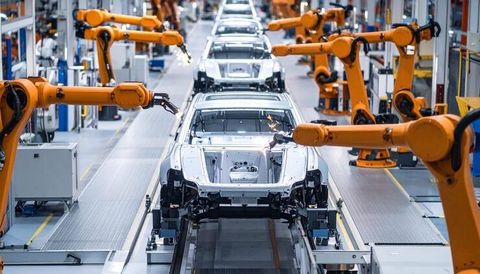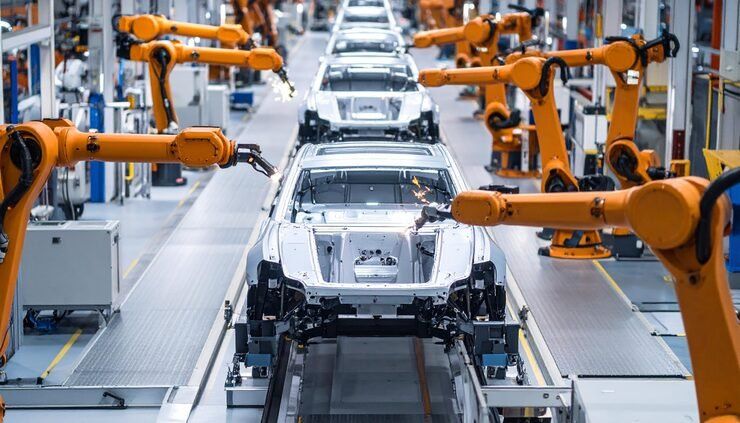
Automotive production and automation combine manufacturing machinery, robotics, industrial controls, material-handling systems, machine vision, and digital production technologies to manufacture vehicles and automotive components. Modern automotive plants use interconnected production processes to transform raw materials and components into finished vehicles through stamping, body assembly, painting, powertrain production, final assembly, inspection, and testing.
Automation plays an important role in coordinating these operations. Industrial robots can perform welding, material handling, painting, assembly, and inspection, while programmable controllers, sensors, machine vision, and manufacturing software coordinate production activities.
Why Automotive Production Automation Matters
Automotive manufacturing involves thousands of components and multiple production stages. Automated equipment can coordinate repetitive and precision-oriented operations while maintaining defined production parameters.
Automotive automation can support:
Robotic welding and joining
Automated assembly
Material handling
Machine tending
Painting and coating
Component inspection
Quality monitoring
Automated fastening
Parts transportation
Production data collection
The level of automation varies according to vehicle type, production volume, component design, factory layout, and manufacturing requirements.
Major Automotive Production Processes
Stamping and Metal Forming
Metal sheets are shaped into vehicle body panels and structural components using presses, dies, forming tools, and automated material-handling equipment.
Robotic systems can transfer metal sheets between presses and production stations.
Body-in-White Assembly
Body-in-white production joins stamped components to create the vehicle body structure.
Robotic welding systems, fixtures, clamps, conveyors, sensors, and vision systems can coordinate this stage.
Painting and Surface Treatment
Vehicle bodies undergo cleaning, pretreatment, coating, painting, drying, and curing processes.
Robotic painting systems can control spray patterns, movement paths, and coating application.
Powertrain Manufacturing
Powertrain production can involve machining, casting, forging, heat treatment, assembly, testing, and inspection of engines, transmissions, electric motors, and related components.
Battery Production
Electric vehicle manufacturing introduces specialized processes for battery cells, modules, packs, thermal-management systems, electrical connections, and battery-pack assembly.
Final Assembly
Final assembly integrates systems and components such as seats, dashboards, windows, wheels, lighting, wiring, electronics, interior components, and other vehicle systems.
Inspection and Testing
Finished vehicles can undergo dimensional inspection, electrical testing, functional testing, leak testing, wheel alignment, brake testing, software diagnostics, and road or dynamometer testing.
Automotive Manufacturing Technologies
CNC Machining
Computer numerical control machines produce precision automotive components such as engine parts, transmission components, shafts, housings, and other machined parts.
Casting
Casting processes produce complex metallic components by filling molds with molten material. Aluminum and iron-based alloys are commonly used for various automotive components.
Forging
Forging uses controlled deformation to produce high-strength components such as shafts, gears, steering components, and other structural parts.
Additive Manufacturing
Additive manufacturing builds components layer by layer and can be used for prototypes, tooling, fixtures, specialized components, and selected production applications.
Laser Processing
Laser technologies can support cutting, welding, marking, surface treatment, and precision processing.
Machine Vision
Machine vision systems use cameras, lighting, image-processing hardware, and software to inspect components and guide automated equipment.
Robotics in Automotive Production
Industrial robots are widely integrated into automotive production lines.
Welding Robots
Robotic welding systems can perform spot welding, arc welding, laser welding, and other joining operations.
Painting Robots
Robotic painting systems provide controlled movement and coating application across complex vehicle surfaces.
Assembly Robots
Assembly robots can position components, apply fasteners, dispense adhesives, insert parts, and perform repetitive assembly tasks.
Material Handling Robots
Robots transfer components between machines, conveyors, storage areas, and production stations.
Inspection Robots
Robotic systems equipped with cameras, scanners, sensors, or measurement equipment can inspect components and finished assemblies.
Collaborative Robots
Collaborative robotic systems can be used in selected applications where people and robots operate in shared work areas under defined safety conditions.
Automated Assembly Systems
Automated automotive assembly combines mechanical equipment, robotics, sensors, fixtures, fastening systems, conveyors, and control software.
Typical automated assembly equipment includes:
Robotic assembly cells
Automated screwdriving systems
Press-fit machines
Adhesive dispensing systems
Automated fastening equipment
Robotic handling systems
Conveyor systems
Automated inspection stations
Sensors can verify component position, fastening conditions, force, torque, and other process parameters.
Automotive Production Automation Architecture
PLC Control
Programmable logic controllers coordinate machines, motors, valves, sensors, safety systems, and production sequences.
Human-Machine Interfaces
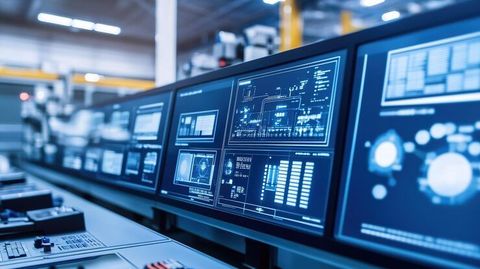
HMIs allow operators and technicians to monitor equipment status, configure processes, review alarms, and access production information.
Industrial Robots
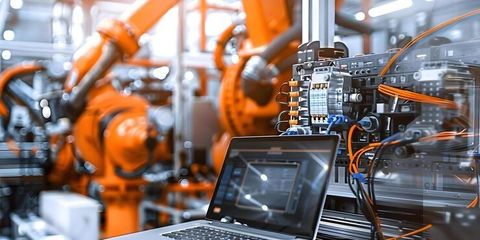
Robot controllers manage movement, positioning, speed, acceleration, and application-specific operations.
Machine Vision
Vision systems identify components, verify assembly conditions, inspect surfaces, and provide positional information to robots.
Manufacturing Execution Systems
Manufacturing execution systems can connect shop-floor activities with production planning, quality records, traceability, inventory information, and performance monitoring.
Industrial Networks
Industrial communication networks connect robots, PLCs, sensors, drives, vision systems, and other production equipment.
Automotive Production Equipment
| Equipment | Primary Function | Typical Application |
|---|---|---|
| Stamping press | Metal forming | Body panels |
| CNC machine | Precision machining | Powertrain components |
| Welding robot | Component joining | Body assembly |
| Painting robot | Automated coating | Vehicle bodies |
| Conveyor | Material movement | Production lines |
| Machine vision system | Inspection | Quality control |
| Assembly robot | Component installation | Vehicle assembly |
| Automated fastening system | Controlled fastening | Final assembly |
| AGV/AMR | Material transport | Factory logistics |
| Testing equipment | Product verification | End-of-line testing |
Manufacturing Process for Automotive Automation Equipment
1. Process Engineering
Engineers establish production requirements, cycle times, component specifications, material flow, automation objectives, and safety requirements.
2. System Design
Production cells, robotic stations, conveyors, fixtures, control panels, sensors, and inspection equipment are designed according to the manufacturing process.
3. Mechanical Fabrication
Frames, fixtures, guards, tooling, conveyors, and machine structures can be produced through cutting, machining, forming, welding, and surface treatment.
4. Electrical Integration
Motors, drives, sensors, controllers, safety devices, electrical panels, and communication systems are installed and connected.
5. Robot Programming
Robotic motion paths, welding parameters, handling sequences, painting patterns, or assembly routines are programmed according to the application.
6. Control Integration
PLCs, HMIs, robot controllers, vision systems, safety systems, and production software are integrated.
7. Testing and Commissioning
Production cells undergo functional testing, safety verification, cycle testing, robot validation, inspection checks, and process simulations before production deployment.
Industrial Applications
Passenger Vehicle Manufacturing
Automation supports body assembly, painting, powertrain production, interior installation, final assembly, and vehicle inspection.
Electric Vehicle Manufacturing
EV production requires specialized automation for battery modules, battery packs, electric motors, power electronics, thermal-management systems, and high-voltage components.
Commercial Vehicle Manufacturing
Trucks, buses, and other commercial vehicles use automated welding, assembly, painting, material handling, and inspection systems.
Automotive Component Manufacturing
Suppliers manufacture components such as gears, bearings, castings, stamped parts, electronic modules, braking components, steering systems, and interior parts using automated production equipment.
Tire Manufacturing
Automated systems support rubber processing, component preparation, tire building, curing, inspection, and material handling.
Factors to Consider When Selecting Automotive Automation Systems
Production Volume
High-volume production generally requires highly coordinated automated systems, while lower-volume manufacturing may use flexible automation.
Cycle Time
Equipment must achieve the required production cycle while maintaining process consistency.
Product Variation
Facilities producing multiple vehicle models may require flexible tooling, programmable robots, quick-change systems, and adaptable production cells.
Quality Requirements
Inspection systems, torque monitoring, vision systems, dimensional measurement, and process monitoring can support automotive quality control.
Integration
Robots, PLCs, conveyors, machine vision, sensors, testing equipment, and production software should operate as an integrated system.
Safety
Machine guarding, safety scanners, emergency stops, interlocks, safety controllers, and other protective systems are important parts of automated production environments.
Scalability
Modular production cells and flexible automation can facilitate future production changes and capacity adjustments.
Future Trends in Automotive Production & Automation
Automotive manufacturing is increasingly integrating artificial intelligence, machine vision, connected equipment, digital twins, robotics, and data analytics.
AI-enabled vision systems can assist with component recognition and defect detection. Digital twins can model production cells and processes before physical implementation.
Electric vehicles are also changing factory automation requirements. Battery manufacturing, electric motor production, power-electronics assembly, and high-voltage testing introduce additional specialized processes.
Industrial IoT connectivity enables machines and sensors to exchange production information, while predictive maintenance technologies can analyze equipment data to identify potential maintenance requirements.
FAQs
What is automotive production automation?
Automotive production automation uses robots, machinery, sensors, controls, software, and material-handling technologies to automate vehicle and automotive-component manufacturing processes.
What robots are used in automotive manufacturing?
Common applications include welding robots, painting robots, assembly robots, material-handling robots, inspection robots, and collaborative robots.
What are the main stages of automotive production?
Major stages include stamping, body-in-white assembly, painting, powertrain or battery production, final assembly, inspection, and testing.
How does machine vision support automotive manufacturing?
Machine vision can inspect components, verify assembly conditions, identify defects, guide robots, measure dimensions, and support automated quality-control processes.
What is the role of PLCs in automotive automation?
PLCs coordinate sensors, motors, actuators, safety systems, production equipment, and process sequences throughout automated manufacturing cells.
Conclusion
Automotive production and automation combine mechanical manufacturing, robotics, industrial controls, machine vision, material handling, inspection, and digital production technologies. Automated welding, painting, assembly, machining, inspection, and logistics systems form important parts of modern automotive manufacturing.
The transition toward electric vehicles is also introducing new automation requirements for battery production, electric motors, power electronics, and high-voltage systems. At the same time, artificial intelligence, industrial IoT, digital twins, and advanced robotics are expanding the ability of automotive factories to monitor and coordinate complex production operations.